

Your first appointment can take up to 90 minutes. I will need to ask you about your medical history and about your swelling. Measurements will be taken and with your consent photos as this is helpful as a measure to judge how well your treatment is progressing.
If your legs are affected an arterial assessment will also be carried out. I will discuss the different types of treatment you may require and together with you make a care plan. A copy of the care plan will be provided and any other relevant leaflets or information to enable you to improve and manage your condition. With your permission I will write to your GP and any other healthcare providers to inform them of our plan of care, request any prescriptions required and possibly ask for any other information or investigations that may be helpful in your diagnosis and treatment.
Manual lymphatic drainage is a gentle massage technique. It uses a series of rhythmic, light strokes in a specific sequence along the lymphatic vessels and surrounding tissues. These movements help to reduce swelling in the affected area and aid in returning lymph to the circulatory system. This is an effective component of the treatment and control of lymphoedema and assists in conditions arising from venous insufficiency.
Fluoroscopy Guided Manual Lymphatic Drainage (FG-MLD) also known as the ‘Fill and Flush’ method has been developed by Professor JP Belgrado (University of Brussels). He visualised the lymphatic vessels by the use of fluoroscopy to create a system of hand movements designed to ensure that the most efficient and effective technique is used to clear and fill the lymphatics. This is a new and innovative technique built on existing knowledge using the most recent findings of anatomy, pathology and physiology in lymphoedema.
Courses of MLD treatments vary depending on the area and severity of swelling. Following this you may require some maintenance sessions, this will be assessed towards the end of your course of treatment. Individual MLD sessions take between 30 to 60 minutes.

Compression garments are an important treatment in the long term management of lymphoedema. Wearing your garment daily is the most effective way of improving and maintaining your condition. Compression garments are graduated to help move fluid up towards the lymph nodes and designed to prevent retention of fluid in the tissues. It provides resistance against which the muscles can pump and move lymph fluid more effectively.
Compression garments are available in a wide variety of different colours, styles and makes. Following an assessment, recommendations will be given on the most appropriate garment for you, specific measurements taken and a prescription request for your GP provided (if garment is available on prescription).
A fitting appointment will then be booked to ensure the correct garment has been received and is safe and comfortable for you to wear. Garments last approximately four to six months and will need replacing because they lose compression over time.
The recommended treatment for lymphoedema is decongestive lymphatic therapy. This is not a cure for lymphoedema, but it can help control the symptoms. Although it takes time and effort, the treatment can be used to help bring lymphoedema under control.
This comprises of 4 components:
Multi-layer lymphoedema bandaging - a specialised bandaging technique, aimed at reducing limb volume and improving shape.
Skin care - this is essential for the prevention of infection and reduction of skin changes.
Exercise - working your muscles will increase the flow of lymph fluid, maintain a healthy weight and keep your joints flexible.
Manual Lymphatic drainage - using the Fill and Flush method to help move lymph fluid and reduce swelling.
DLT is an intensive phase of therapy, during which you may receive daily treatment for several weeks to help reduce the volume of the affected limb.
The second phase is maintenance therapy and you will be encouraged to take over your care using simple self-massage techniques, wearing compression garments and continuing to exercise and look after your skin.
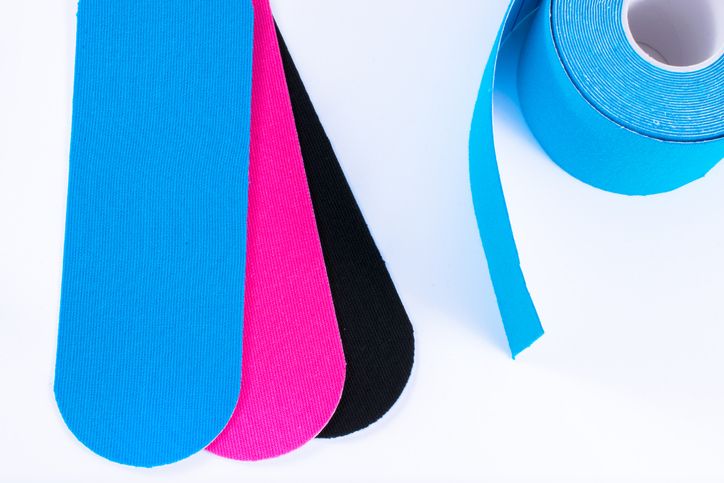
Kinesio Taping is recognised as an effective and successful treatment for reducing lymphoedema. Drainage is achieved by using specialised application techniques to lift the skin in the affected area, encouraging the lymphatic fluid to travel from the swollen and congested area to an uncongested area, where it can drain naturally back into the circulation.
Please note a 24 hour patch test is required before Kinesio taping can be applied.